
Wednesday, January 19, 2011
Home environment variables and adolescent soft drink consumption

Saturday, January 8, 2011
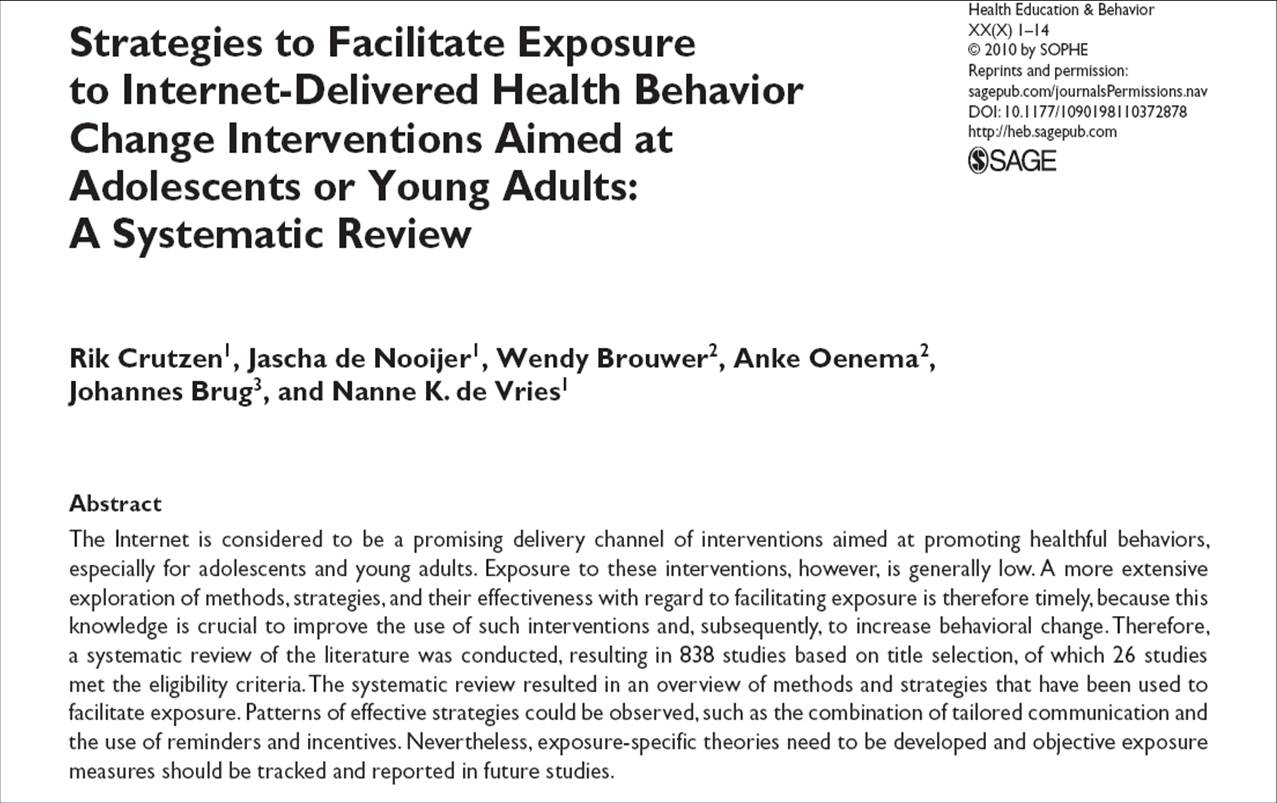
Two review studies provide systematic insights in what may promote exposure to internet delivered health promotion interventions
cycling in Patagnonia

Tuesday, November 30, 2010
Tailored health education messages increase attention

Tuesday, November 16, 2010
Preparing a special series on epidemiological modelling to progress obesity research and inform obesity policy.
 On Monday and Tuesday, November 15 and 16 a group of scientists got together in London at the Welcome Trust conference center, guided by the editors of the Lancet, and supported by the National Heart Forum, to prepare a special series in the Lancet journal on the progress in obesity epidemic and policy research enables by the development and use of epidemiological modelling. This special series will be similar to the one on chronic disease that was recently published in the journal.
The authors of the draft papers were there as well as invited reviewers, to present and comment upon the draft papers and discuss the further development of the special series. I was invited to review on of the four papers. Of course, because the papers are still in a preliminary state, no details on the content of the papers can be shared here. But the series will probably make an important contribution to informing clinicians, public health professionals, policy makers, as well as the general public about epidemiological modelling contributing to better evidence-based obesity policies.
Thursday, November 11, 2010
Experiencing the new Nordic Diet at Noma restaurant
A few years ago, Dr. Elling Bere of Agder University in Kristiansand, Norway and myself published a paper in Public Health Nutrition, arguing in favour of regionally appropriate and sustainable health promoting diets ‘diets’.


We argued that because most of the key determinants of the world’s burden of disease are diet-related, the promotion of healthful diets is important for population health worldwide. Furthermore, we argued that changes in health promoting eating habits may also contribute to preservation of the environment. For that purpose, we believed that the translation of health-promoting dietary recommendations into practical recommendations for healthful eating should be more tailored to regional circumstances. This will promote population health as well as help preserve cultural diversity in eating habits and contribute to more environmentally friendly eating. We described a possible regional ‘Nordic’ diet, mimicking the Mediterranean diet to some extent, as an example of such regionally appropriate health promoting diets based on food stuffs readily available and culturally embedded in the Nordic countries of Europe.
The ‘Nordic Diet’ has received quite some attention in recent years and a Danish research project was started. Arguably the best advocate of Nordic eating is the famous Noma restaurant. Noma is a two Michelin star restaurant run by chef René Redzepi in Copenhagen, Denmark. The name is an acronym of the two Danish words "nordisk" (Nordic) and "mad" (food), and the restaurant is known for its reinvention and interpretation of the Nordic Cuisine. In 2010, it was ranked as the Best Restaurant in the World.

Yesterday I was finally able to enjoy the Nordic diet in the very best possible way. With foods like fried reindeer moss, live shrimp (see picture!), goat butter, pine needle desert, wild duck, steamed oyster and much more, I had the best eating experience ever.
Thursday, November 4, 2010
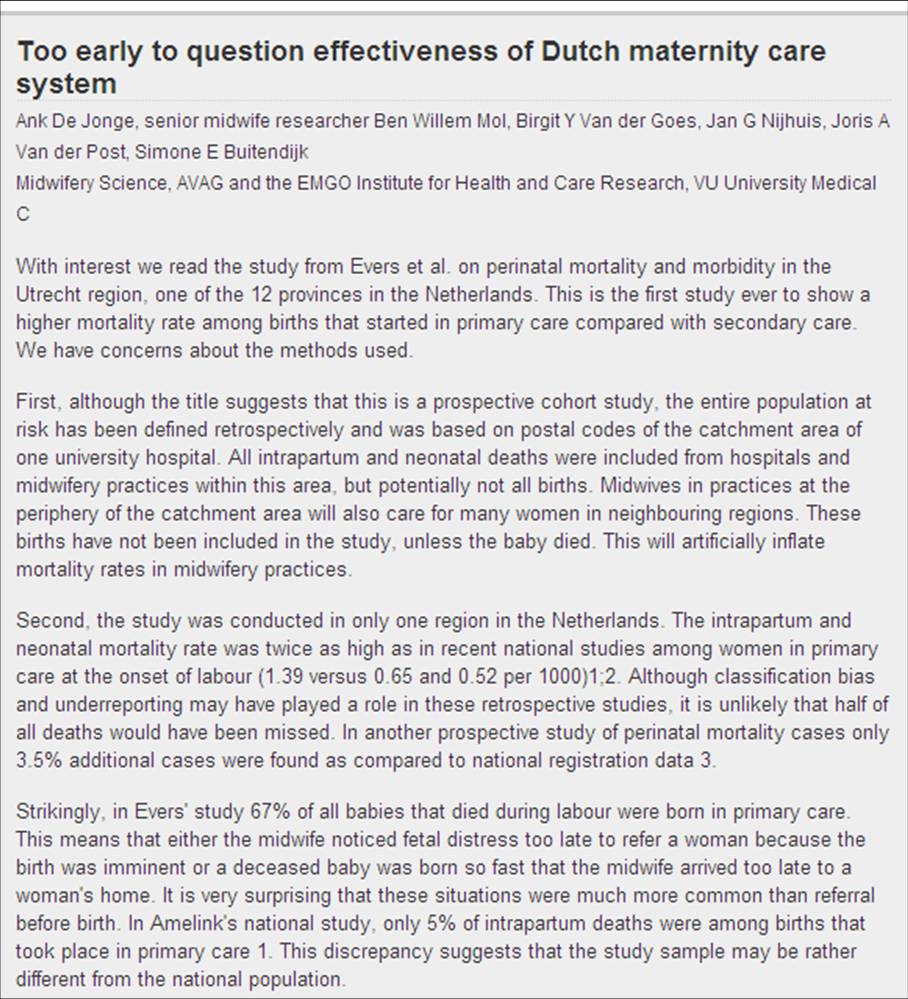
EMGO+ Midwifery researchers respond in BMJ to a paper in that journal questionning the Dutch maternity care system
 |
| Click here for the full rapid response |
Dr. Ank de Jonge from the EMGO Institute for Health and Care Research and colleagues wrote a rapid response in the British Medical Journal to the paper by Evers et al. in the BMJ on perinatal mortality and morbidity in the Utrecht Netherlands
Subscribe to:
Posts (Atom)